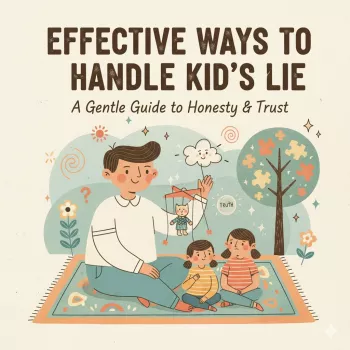
Start by treating repeated lying as a skills-and-safety problem, not a character flaw. Discipline works best when it’s calm, consistent, and focused on rebuilding trust. The goal is to make honesty feel safer than lying while still holding clear boundaries.
If the response to lying is explosive, kids often lie more to avoid the reaction. Take a breath, name what you noticed, and ask a simple, neutral question. “I’m seeing two different stories. Help me understand what happened.”
Use language that protects their identity: “Lying isn’t okay,” instead of “You’re a liar.” This reduces shame, which can fuel more dishonesty, and keeps the conversation focused on making better choices next time.
Choose a consequence that fits the situation and is easy to enforce: pausing a privilege, redoing a task, or making restitution. Keep it short and predictable. Avoid long lectures or harsh punishments that shift attention to “getting away with it” rather than telling the truth.
After the consequence, guide a repair step: telling the truth, apologizing, returning what was taken, or helping fix what was damaged. This teaches accountability and gives a path back to connection and trust.
When your child admits the truth, acknowledge it: “Thank you for telling me. That took courage.” Then handle the issue with a lighter consequence than they’d get for lying and the behavior itself—so honesty becomes the better deal.
Lying often spikes around fear of punishment, perfectionism, attention-seeking, or impulse control. Build routines, give choices, and practice “truth scripts” for tricky moments. For more calm, gentle strategies and examples you can use word-for-word, see this guide on calm, gentle ways to handle kids who lie.
Keep your first response steady, thank them for being honest, and address the behavior with a fair consequence. If they expect yelling or humiliation, they’ll protect themselves with more lies.











Leave a comment