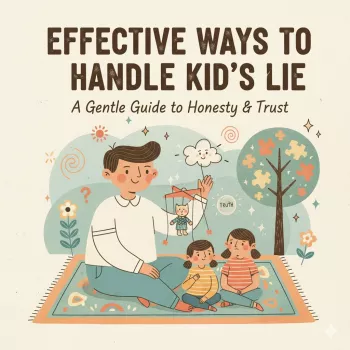
Kids lie for many reasons—fear of getting in trouble, wishful thinking, protecting a friend, avoiding embarrassment, or testing boundaries. Responding with calm clarity helps preserve trust while still holding firm limits. The goal isn’t only to stop the lie in the moment; it’s to build skills that last: emotional safety, accountability, and repair.
Lying often gets labeled as “bad behavior,” but it’s more accurate to see it as information. The lie usually points to what a child is trying to protect: their connection with you, their sense of competence, or their social world.
| Type of lie | What it can signal | A gentle, firm response |
|---|---|---|
| Fear-based lie | Worry about punishment or anger | “Thanks for telling me. The rule still matters—let’s fix what happened together.” |
| Wishful thinking | Big feelings, wanting something to be true | “That would be nice. What actually happened?” |
| Impulse lie | Blurted denial before thinking | “Pause. Take a breath. Try again with the truth.” |
| Protecting someone | Loyalty, empathy, peer pressure | “I see you care about them. We can be kind and still be honest.” |
| Privacy/independence | Need for autonomy | “You can have privacy. I do need honesty about safety and responsibilities.” |
The first 30 seconds matter. When a child expects anger, they double down. When they see steadiness, they’re more likely to risk the truth.
If you need a quick gut-check, aim for “steady and curious.” Even when you’re certain what happened, a calm tone makes it easier for your child to come back to integrity.
Honesty grows when telling the truth is emotionally safer than covering it up. That doesn’t mean “no consequences”—it means consequences that are predictable, proportionate, and paired with a path to repair.
When kids learn language for fear, shame, and disappointment, they rely less on lying as a self-protection tool. For research-based guidance on child development and behavior, resources like HealthyChildren.org (American Academy of Pediatrics) and the CDC Essentials for Parenting can be helpful references.
Gentle parenting still needs a backbone. The goal is to hold the line while preserving dignity, so your child learns: “I can tell the truth and face it.”
For additional parenting perspectives and child development topics, the American Psychological Association offers practical overviews worth browsing.
Many families are shifting toward approaches described as authoritative, responsive, or “kind and firm”—clear boundaries, consistent follow-through, and emotional attunement without permissiveness or harsh punishment.
Focus on safety and skill-building: stay calm, invite a do-over, use logical consequences, and pair honesty with repair so the truth becomes the fastest way back to connection and trust.









Leave a comment