Printable Daycare Snack Planner for Toddlers (Checklist)
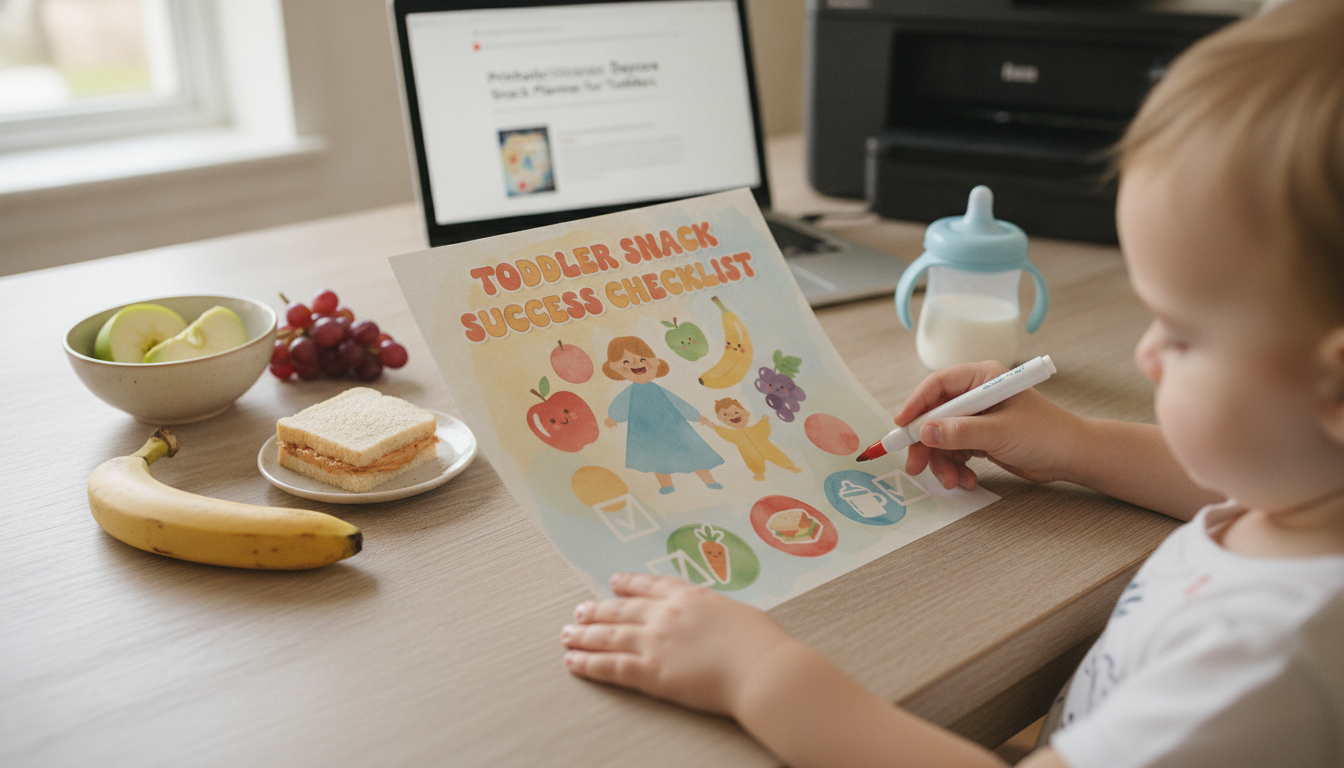
Toddler Snack Success Checklist: A Printable Daycare Snack Planner That Makes Mornings Easier
Packing daycare snacks for a toddler can feel like solving a daily puzzle: what they’ll actually eat, what’s allowed, what stays fresh, and what won’t come back untouched. A simple checklist-and-planner approach cuts down the guesswork by rotating dependable options, balancing food groups, and keeping daycare rules in view. Below is a practical snack framework you can reuse all year, plus an easy way to turn “What do I pack?” into a repeatable routine.
What “snack success” looks like at daycare
A successful daycare snack is less about perfection and more about consistency: it follows the rules, travels well, and keeps your toddler comfortably satisfied.
- Meets daycare rules: aligns with allergy policies, no-heat expectations, choking-risk restrictions, and packaging guidelines.
- Balances energy: pairs a carbohydrate with protein and/or healthy fat to help toddlers stay satisfied longer.
- Works with toddler skills: manageable textures and portions that support self-feeding.
- Travel-proof: holds up in a lunchbox and stays safe with an ice pack when needed.
- Repeatable: relies on a small set of go-to snacks so mornings feel automatic.
For safety reminders on common choking hazards and how to modify foods, the CDC’s guidance is a helpful reference: Centers for Disease Control and Prevention (CDC) — Choking Hazards.
A quick checklist before packing
When time is tight, a short “scan” keeps you from realizing at drop-off that something breaks a classroom policy or won’t hold up until snack time.
- Confirm the daycare’s current food policy (especially nut rules and shared snack requirements).
- Choose 1 “main” snack plus 1 “helper” item (fruit/veg, dairy alternative, or crunch) to round it out.
- Aim for bite-size pieces; avoid round, hard foods unless modified appropriately (for example, grapes quartered lengthwise).
- Add a drink only if required; water is usually simplest.
- Label containers and include a small napkin or wipe if your daycare allows it.
Daycare Snack Packing Checklist (quick scan)
| Checkpoint | What to look for | Examples |
|---|---|---|
| Allergy-safe for the classroom | Matches daycare restrictions and avoids cross-contact | Seed butter instead of peanut butter; clearly labeled packaged items |
| Choking-risk aware | Appropriate shapes/textures for toddlers | Soft fruit slices; cooked veggie sticks; crackers that dissolve easily |
| Balanced enough to last | Carb + protein/fat when possible | Cheese cubes + fruit; hummus + pita; yogurt + granola (as allowed) |
| Temperature plan | Shelf-stable or packed cold | Ice pack for dairy; shelf-stable applesauce pouch |
| Portion sized for toddlers | Small servings reduce waste and overwhelm | A few tablespoons of yogurt; a small handful of cereal; 4–6 crackers |
Building blocks for a simple snack rotation
Instead of hunting for brand-new ideas every night, build a short rotation that’s flexible. Variety comes from mixing add-ons, not reinventing the whole plan.
- Pick 5–7 reliable “main” snacks and rotate them through the week.
- Keep a small add-on list (fruit, veggie, crunch, dip) that can mix-and-match with the mains.
- Include a shelf-stable backup for mornings that go sideways (applesauce, crackers, fruit in juice, age-appropriate roasted snacks).
- Plan for sensory preferences: pair one familiar “safe” food with one small new option.
- Use a predictable pattern: for example, “dip day,” “dairy day,” or “leftover-friendly day” to make planning quicker.
For nutrition basics and balanced snack ideas by age, see HealthyChildren.org (American Academy of Pediatrics) — Healthy Snacks for Kids and USDA MyPlate — Preschoolers: Healthy Eating Tips.
Best snack combinations that pack well
These pairings travel well, support self-feeding, and help you hit the “carb + protein/fat” goal without overthinking it.
- Yogurt + soft fruit (pack cold): choose lower-added-sugar options when possible and use a leak-resistant container.
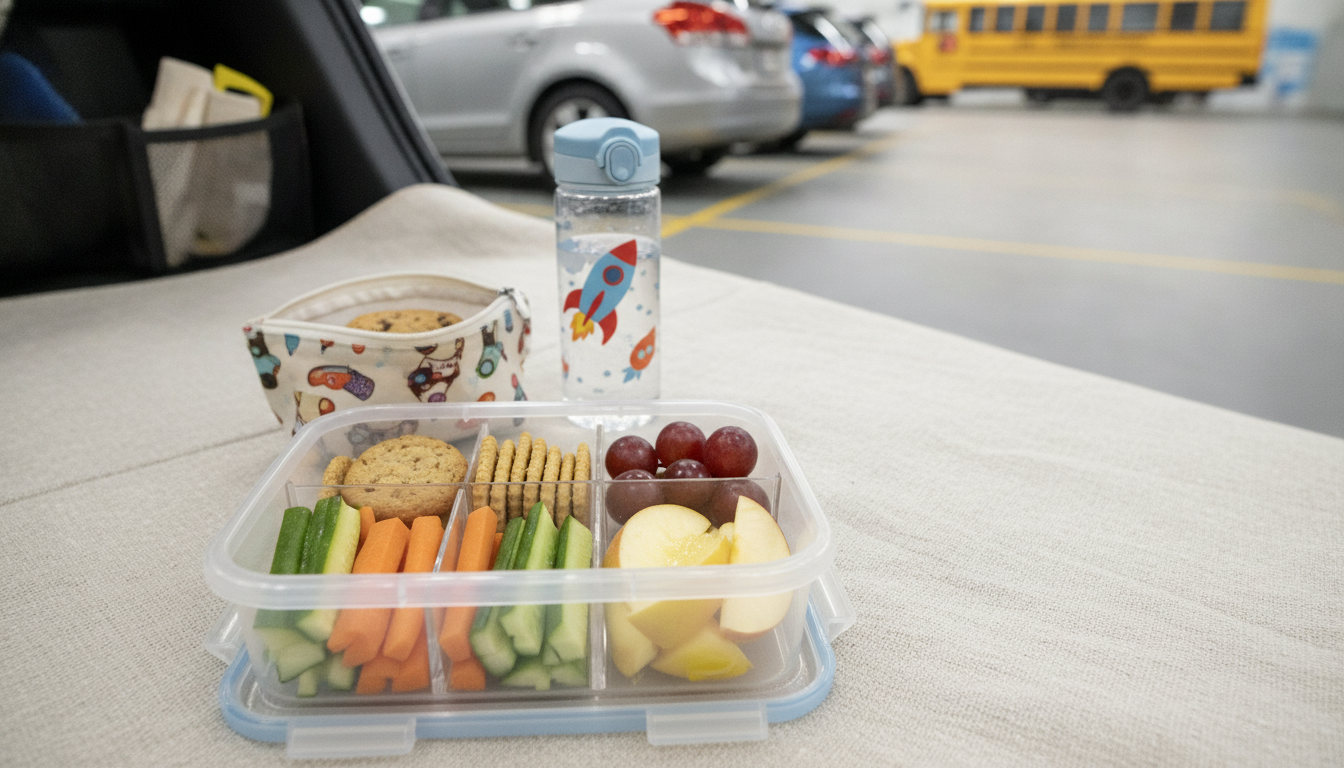
- Cheese + whole-grain crackers: easy finger food; add cucumber sticks or berries for color and hydration.
- Hummus or bean dip + pita triangles: creamy texture often works well for toddlers; include a familiar side.
- Mini sandwich squares: seed butter or cream cheese with thin fruit slices; keep portions small and manageable.
- Oat bar or homemade muffin + fruit: helpful for early drop-offs; pair with a protein item when possible.
If your daycare is nut-free, seed butter can keep the sandwich idea in rotation while staying policy-friendly.
Making the printable planner do the work
A planner is most useful when it becomes your default path—same decisions, same order, less mental load.
If you want a ready-made system, the Toddler Snack Success Checklist printable planner is designed for quick weekly planning, simple snack rotations, and faster mornings.
Handling picky phases and preventing waste
If snack struggles seem tied to sensory overload (noise, transitions, unfamiliar foods), Quiet the Storm: A Friendly Guide to Calming Sensory Overload in Kids can complement your snack routine by supporting calmer transitions and more predictable daily rhythms.
Food safety, labeling, and practical packing tips
If your toddler is also moving from bottles to cups, a simple routine can make mornings smoother overall. The Bye-Bye Bottle! Toddler Bottle-Weaning Checklist is a helpful companion for building a consistent drop-off plan.
Printable resource for snack planning
FAQ
What are good snacks for toddlers at daycare?
Pack toddler-friendly combinations that fit daycare rules, like fruit + cheese, yogurt + berries, hummus + pita, crackers + bean dip, or a small muffin + fruit. Keep portions small and include an ice pack for perishables.
How many snacks should a toddler bring to daycare?
Follow your daycare’s schedule and requested amount—many programs have one to two snack times. Adjust portion sizes so the snack is satisfying without replacing meals.
How can snacks be packed to stay fresh and safe?
Use an insulated bag and an ice pack for perishables, choose leak-proof containers for wet foods, and separate crunchy items to prevent sogginess. Label containers clearly to avoid mix-ups.







Leave a comment