Teach Toddler Colors & Numbers With 10-Second Routines
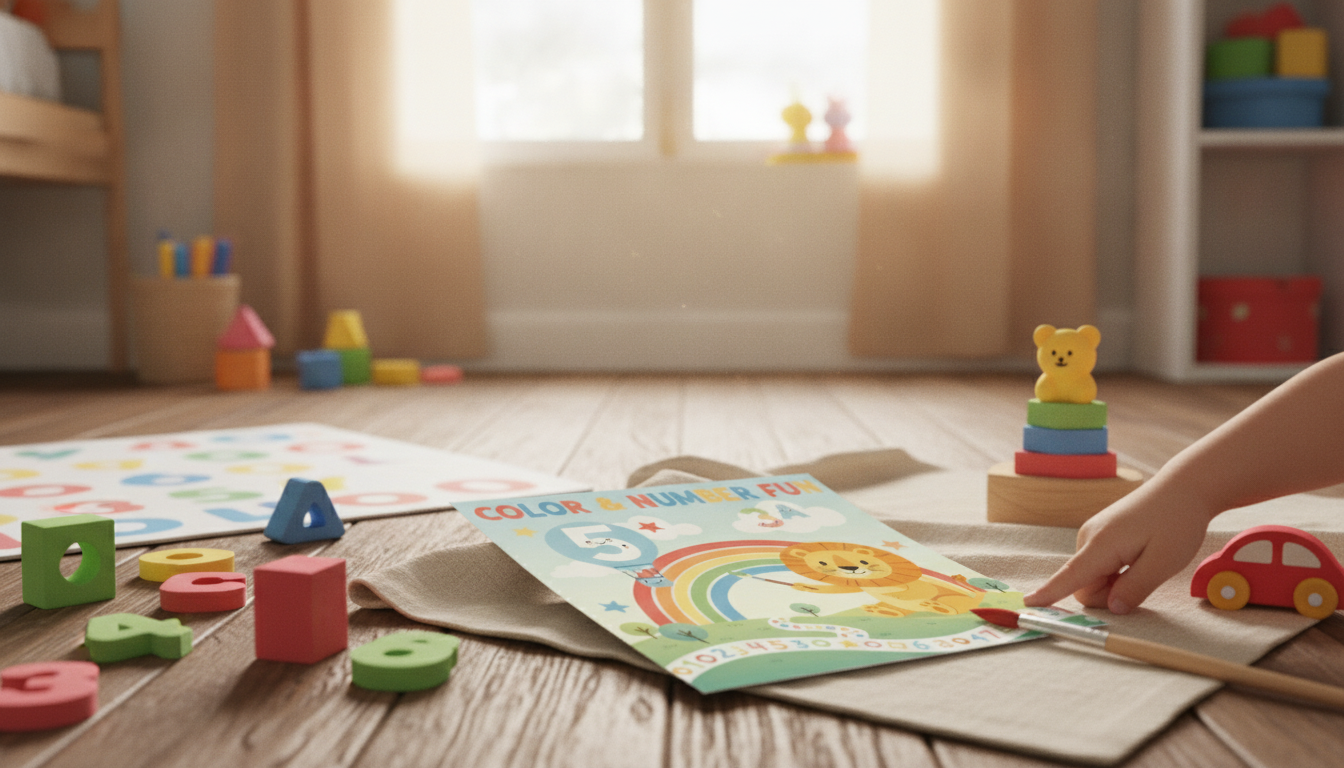
Color & Number Fun Checklist: Playful Daily Routines for Teaching Toddlers Colors and Numbers
Toddlers learn best through tiny, repeatable moments that feel like play—not long lessons. A routine-based approach turns breakfast, laundry, bath time, and neighborhood walks into quick chances to notice colors and practice counting. Keep prompts simple, repeat the same phrases day after day, and celebrate attempts (even the “almosts”) so learning stays light, steady, and doable.
If you want a ready-to-use set of prompts you can keep on your phone or print, the Color & Number Fun Checklist | How to Teach Toddler Colors and Numbers Through Playful Daily Routines is designed to plug directly into daily life—no prep, no worksheets.
What Toddlers Learn First (and What “Counts” as Progress)
Color and number skills grow in layers. The early layers may not look like “knowing” yet, but they’re real progress.
- Colors often start with noticing and matching before naming. Pointing to “the same color” or handing you the correct colored object is a win.
- Numbers begin with number sense: understanding “a lot vs. a little,” “one more,” and counting small sets with help.
- Mix-ups are normal: confusing color words, skipping numbers, or counting faster than objects is part of the process.
- Keep goals tiny: during one routine, focusing on 1–2 colors and counting to 3–5 is plenty.
For a quick check of broad developmental expectations, you can compare your child’s overall milestones with the CDC Developmental Milestones.
A Simple Daily Rhythm: Micro-Moments That Add Up
- Aim for 5–10 micro-moments per day (10–30 seconds each) instead of one long “learning time.”
- Use the same phrasing daily: “Find the red one,” “Count with me,” “Which is bigger?” Repetition is the engine.
- Rotate the focus: one day emphasize colors, another day counting, then combine both when it’s smooth.
- Stop while it’s still fun. Ending on success builds the desire to try again later.
The goal is calm consistency—an idea that aligns with developmentally appropriate practice guidance from the NAEYC.
Morning Routine: Getting Dressed, Breakfast, and Out the Door
- Clothes choices: offer two options and label color + item: “Blue shirt or green shirt?”
- Socks/shoes: match pairs by color; count as you put them on: “1 sock… 2 socks.”
- Breakfast counting: count grapes or crackers into a bowl (3–5). Then compare: “Do you have more or less?”
- Packing to leave: “Find 2 things that are red,” or “Put 3 toys back in the bin.”
If mornings are already busy, use one prompt only. One successful prompt daily beats five prompts that end in frustration.
Playtime Routines: Blocks, Cars, Dolls, and Art Without Extra Prep
- Blocks: build mini color towers: “Two blue blocks, one yellow block.” Count each piece as it stacks.
- Toy cars: make a “parking lot” by color; count cars in a row up to 5.
- Pretend play shop: use simple number requests: “Can I have 2 apples?” Add color once it’s easy: “2 red apples.”
- Art time: offer only 2–3 crayons/markers. Ask for a color and count dots, stamps, or stickers.
Errands and Walks: Real-World Color and Number Hunts
- Sidewalk hunt: “Find something yellow,” or “Count 3 steps with me.”
- Store run: count items into the cart: “Let’s get 4 bananas.” Match colors in produce and packaging.
- Car rides: count stop signs, buses, or dogs; pick a target color for each block.
- Keep it calm: if your toddler is tired, switch to easy pointing instead of naming.
For more on early learning through everyday interactions, AAP HealthyChildren.org offers practical, age-based guidance.
Meals, Bath, and Bedtime: Gentle Practice When Energy Is Low
- Meal setup: count napkins or plates; sort food colors on the plate (peas green, carrots orange).
- Bath time: count cups poured, bubbles popped, or toys in/out; label towel and toy colors.
- Books: choose pictures with strong color contrast; count objects on a page together.
- Bedtime reset: one-sentence recap: “Today we found blue socks and counted 3 cars.” Then move on.
If big feelings or sensory overload make evenings harder, pair learning with calming tools first. The Quiet the Storm: A Friendly Guide to Calming Sensory Overload in Kids can help you steady the routine so your child can engage again.
Quick Prompts That Work (Use the Same Few Every Day)
Routine-to-Skill Map (Pick One Prompt and Keep It Short)
| Routine | Color idea | Number idea | One easy prompt |
|---|---|---|---|
| Getting dressed | Match socks by color | Count clothing items (1–5) | “Find the blue sock.” |
| Snack time | Name food colors | Count bites or pieces | “Put 3 crackers on the plate.” |
| Block play | Sort blocks by color | Count blocks in a tower | “Two red blocks, then stop.” |
| Bath | Color-name bath toys | Count pours or toys | “Let’s count 5 splashes.” |
| Walk/errands | Color hunt outdoors | Count steps/objects | “Find something yellow.” |
Common Roadblocks (and Simple Fixes)
Using the Color & Number Fun Checklist
For parents who want snack routines to pull double duty (nutrition + learning), the Toddler Snack Success Checklist makes snack prep a consistent place to sort colors and count pieces.
Pair It With Other Family Checklists When Needed
FAQ
What age do toddlers usually learn colors and numbers?
Many toddlers begin recognizing and matching colors around ages 2–3, with naming often coming later and improving through repetition. Early counting usually starts with small sets (1–3, then 1–5) and grows as one-to-one counting becomes easier.
How can counting be taught if a toddler just recites numbers like a song?
Use one-to-one correspondence: touch or move each object as you count, and keep sets small (3–5). Stop early so your toddler doesn’t rush ahead of the objects.
What if my toddler refuses to participate?
Reduce demands: offer two choices, model the answer briefly, and keep the moment under 30 seconds. Try again during a calmer routine and treat pointing or partial attempts as success.






Leave a comment