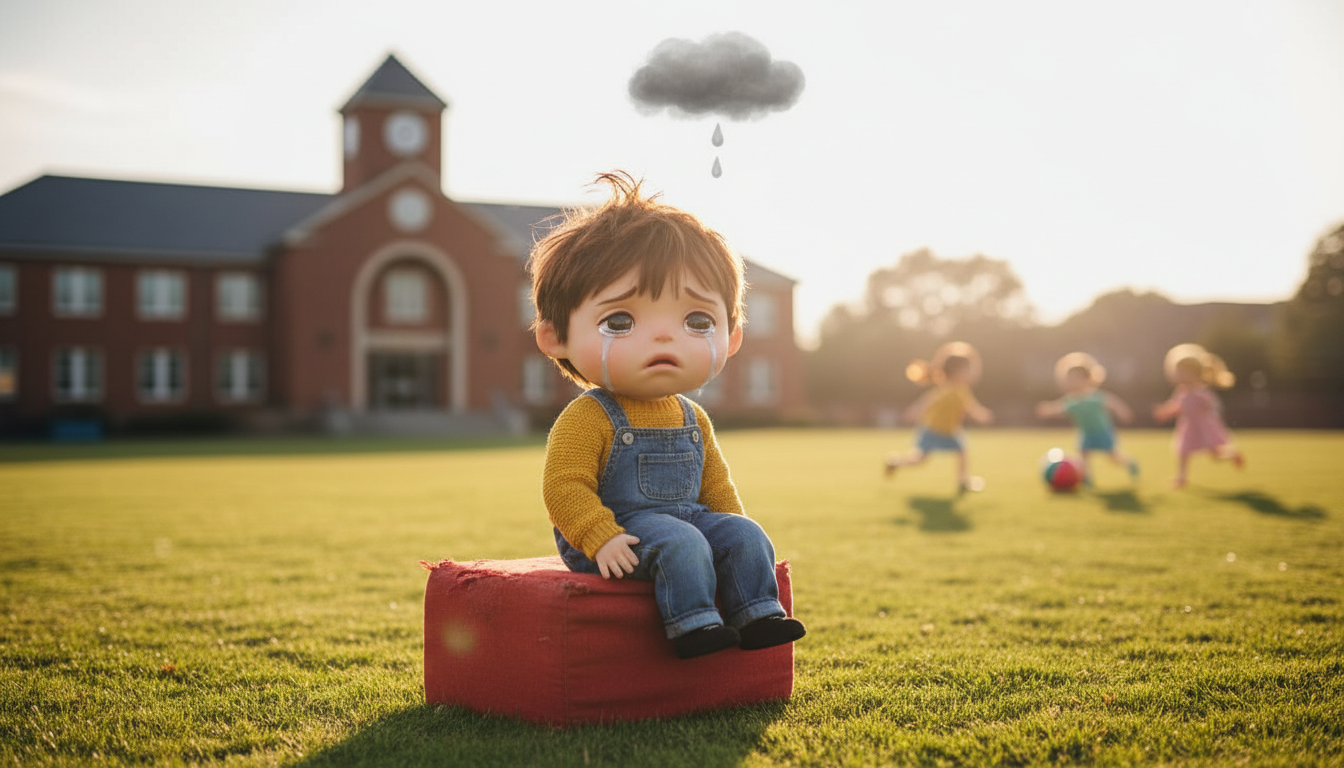
Some kids love kindergarten right away; others feel overwhelmed by new routines, louder rooms, bigger expectations, and time away from home. Struggles can show up as tears at drop-off, frequent stomachaches, behavior changes, or sudden resistance to reading and writing tasks. The goal isn’t to “toughen up” a child—it’s to meet the need underneath the struggle, build safety, and create small, repeatable supports at home and school.
Kindergarten stress can be loud (tantrums, refusal) or quiet (shutdown, avoidance). Common signs include separation anxiety, daily meltdowns after school, sleep regression, clinginess, irritability, frequent nurse visits, refusal to go, and new toileting accidents.
Academic stress can look like avoiding books, refusing to write their name, frustration with letters/sounds, saying “I’m bad at school,” perfectionism, slow work, and trouble following multi-step directions.
Often, it’s not one “big problem.” It’s a mix of environmental change, sensory load (noise, lighting, crowds), rising social demands, executive function growth (attention, transitions), and uneven development (skills don’t all arrive together). A short adjustment period is common; persistent distress is a signal to add supports and collaborate with the teacher.
Rule out physical discomfort first: sleep, breakfast, hydration, constipation, illness, headaches, and vision/hearing concerns. Behavior is often communication, and discomfort can make a typical school day feel impossible.
Help your child name what’s happening: “Drop-off feels scary because you miss home.” Validate without escalating: “It makes sense to feel nervous.” This reduces shame and opens the door to coping tools.
Pinpoint the hardest moments so support targets the right spot: arrival, transitions, loud centers, lunch, recess conflict, seatwork, or timed tasks. Specificity turns “bad days” into solvable patterns.
Preview the day in two sentences (“Your class has centers, then lunch, then recess. After school, I’ll be at pickup.”). Pack one comfort routine (a note, a small photo, a scent-free fidget if allowed). Practice a 10-second goodbye script at home so it’s familiar when emotions run high.
A confident handoff helps more than a long pep talk. Aim for: one hug, one phrase, one action (walk to the teacher, place the backpack), then leave. Lingering often increases distress because it keeps the “should I stay or go?” cycle going.
Many kids hold it together all day and crash at home (“restraint collapse”). Offer 15–30 minutes of quiet choice (snack, movement, sensory play) before questions. Save problem-solving for later, once their body has reset.
Spend five minutes in “special time” where your child leads play and you follow. The point is not teaching—it’s refilling safety and belonging.
| Challenge | What it may mean | Gentle support to try |
|---|---|---|
| Tears at drop-off | Separation anxiety, uncertainty, slow-to-warm temperament | Predictable goodbye routine; transitional object; teacher greeting job (hand out folders) |
| Meltdowns after school | Overstimulation, fatigue, holding it together all day | Snack + quiet play first; earlier bedtime; reduce after-school commitments |
| Refuses writing/letters | Fine-motor fatigue, fear of mistakes, skill gap | Play-dough pinches, tracing in sand, write with markers; praise effort; short practice |
| Behavior notes from teacher | Needs help with transitions, impulse control, social problem-solving | Practice transition scripts; role-play; visual schedule; reinforce one target behavior |
| Says “I’m bad at school” | Shame, perfectionism, repeated struggle | Normalize learning curve; name strengths; set one tiny goal; celebrate process not score |
If you suspect anxiety is playing a bigger role, the CDC overview on childhood anxiety is a helpful starting point for understanding common signs and when to talk with a professional.
The American Academy of Pediatrics back-to-school tips can also help you sanity-check routines that support learning, sleep, and resilience.
A one-page checklist reduces decision fatigue on stressful days and keeps support consistent across caregivers. The When Kindergarten Feels Tough printable parent checklist is designed to be quick to follow during real-life mornings, with drop-off scripting, after-school decompression ideas, and simple emotional and academic supports.
If sensory overload seems to be a big driver (noise, crowded centers, itchy clothes, bright lights), Quiet the Storm: calming sensory overload in kids offers practical, kid-friendly strategies you can practice at home and coordinate with school routines.
Many children settle in within a few weeks, but temperament and sensitivity to transitions can stretch adjustment longer. If distress stays intense past 6–8 weeks or interferes with sleep, appetite, or learning, add targeted supports and check in with the teacher and pediatrician.
Use the same brief goodbye routine each day, keep the handoff confident, and leave after one hug/one phrase/one action. If allowed, send a small transitional object and coordinate with the teacher for an immediate “greeting job” so your child has a clear first step.
Keep practice short, playful, and success-based—stop before frustration spikes. Focus on fine-motor readiness and simple games, and ask the teacher what skills are expected now versus later so you don’t overpractice the wrong things.








Leave a comment