Parenting Feels Too Much? A 10-Minute Calm Reset
When Parenting Feels Too Much: A Calm, Practical Reset You Can Use Today
Overwhelm in parenting can show up as irritability, shutdown, racing thoughts, or the sense that every small request is one demand too many. When that pressure spikes, it helps to break the experience into manageable pieces—what’s happening right now in your body, what you can do in the next 10 minutes, and what small routines make hard days less frequent.
What “too much” feels like (and why it makes sense)
“Too much” often looks like snapping faster than you normally would, crying easily, wanting to escape the room, struggling to make basic decisions, feeling numb, or dreading routine tasks like meals and bedtime. These aren’t character flaws—they’re common signs that your nervous system is overloaded.
Overwhelm is usually the result of stacked stressors: sleep loss, constant noise, visual clutter, emotional labor, work deadlines, and the pressure of being needed all day. It’s rarely one “bad moment.” And when a child is dysregulated (meltdown, defiance, whining, sensory overload), your stress response can spike too. The goal shifts from perfection to restoring safety and predictability.
Self-judgment keeps the stress cycle going. One small but powerful move is naming what’s happening: “This is overwhelm.” That label creates a little distance from shame and makes room for problem-solving.
A 2-minute reset for the exact moment things boil over
When you’re at the edge—about to yell, shut down, or burst into tears—aim for a reset that is short enough to actually use.
- Choose “pause words.” Repeat one phrase silently: “Slow is safe,” “One thing at a time,” or “I can handle the next step.”
- Body first. Drop your shoulders, unclench your jaw, place both feet flat, and exhale longer than you inhale for 4–6 cycles.
- Reduce inputs. If you can, lower lights, reduce noise, and turn off nonessential screens. Put one hand on a counter or wall to ground yourself.
- Create a micro-boundary. Say: “I’m taking three breaths and then I’ll help,” or “I need one minute to reset.”
- If your child is escalating: use fewer words, a softer tone, and simple choices (two options max) to lower cognitive load for both of you.
The 10-minute triage: stabilize, simplify, then solve
Think of overwhelm like a smoke alarm. First you reduce the heat, then you figure out what caused it. This quick triage helps you do that in a realistic order.
Stabilize
Check the basics that intensify overwhelm: hunger, thirst, bathroom needs, temperature, pain, and fatigue. Your body can’t “logic” its way out of an alarm state.
Simplify
Pick the smallest “next right thing” (snack, diaper, shoes on, five-minute tidy) instead of trying to fix the whole day at once. Use a one-task rule: do one task at a time until stress drops.
Solve
Only after some calm returns, decide what changes in the next hour: cancel optional plans, order food, move bath earlier, or simplify bedtime. If multiple kids need you, triage safety first, then the youngest/most dysregulated, then everything else.
| Minute | Focus | What to do | Helpful sentence |
|---|---|---|---|
| 0–2 | Stabilize body | Feet on floor, slow exhale, sip water if available | “I’m safe; I’m resetting.” |
| 2–5 | Meet urgent needs | Snack, potty, diaper, pain check, temperature check | “First needs, then plans.” |
| 5–8 | Reduce demands | Pause nonessential tasks, lower noise/light, choose one priority | “Only the next step matters.” |
| 8–10 | Micro-plan | Decide: what gets delayed, delegated, or dropped today | “Today can be simpler.” |
Daily friction points that quietly drain capacity
Many “out of nowhere” blowups are really the result of predictable friction points. A few targeted tweaks can prevent the pileup.
Building a “pressure valve” routine for hard days
For a deeper look at how stress affects the body—and why it can feel so intense—see the American Psychological Association’s overview of stress effects.
What to say after snapping (repair without a long speech)
When overwhelm becomes a red flag
If overwhelm is daily, rage feels out of control, sleep is consistently poor, or anxiety/depression symptoms are increasing, it’s time to add more support. Postpartum mood and anxiety disorders can show up anytime in the first year (and sometimes beyond). Resources like the CDC’s information on depression among women can help you recognize signs and find next steps.
Safety is the priority. If there is fear of harming yourself or someone else, seek immediate help from local emergency services or the 988 Suicide & Crisis Lifeline.
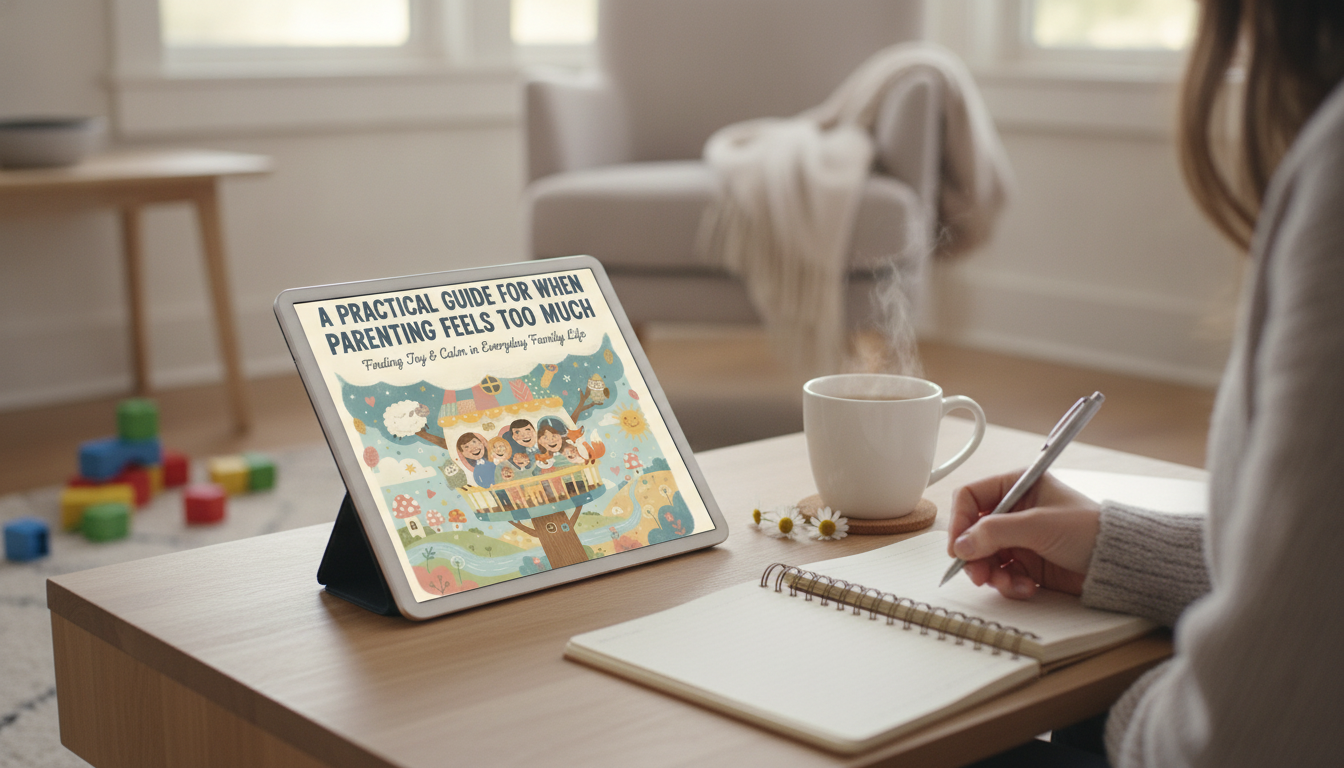
A ready-to-use digital guide for overwhelmed parenting days
- A Practical Guide for When Parenting Feels Too Much | Digital Parenting Guide | What to Do When Overwhelmed with Parenting (Digital download, $10.99)
- Quiet the Storm: A Friendly Guide to Calming Sensory Overload in Kids | Ebook with Tips for Calming Sensory Overload in Kids (Ebook, $4.99)
- Toddler Snack Success Checklist | Printable Guide for Parents | Best Snacks for Toddlers at Daycare | Healthy Toddler Snack Planner | Instant Digital Download (Printable, $4.99)
FAQ
What should be done first when parenting feels overwhelming?
Start with body regulation and urgent needs: slow your breathing, get a sip of water, and check for hunger, potty needs, pain, or temperature discomfort. Then drop nonessential demands and choose one small next step.
How can yelling be stopped once it starts?
Use a micro-boundary (“I need one minute”), reduce your words, lower sensory input, and switch to a short, steady script. Afterward, repair with a brief apology and a do-over in a calmer voice.
When is it time to get professional help for parenting overwhelm?
If overwhelm is frequent, feels uncontrollable, includes rage, anxiety, depression, or sleep collapse, or raises safety concerns, reach out to a clinician or therapist. If there is immediate risk of harm, contact emergency services or crisis support right away.










Leave a comment