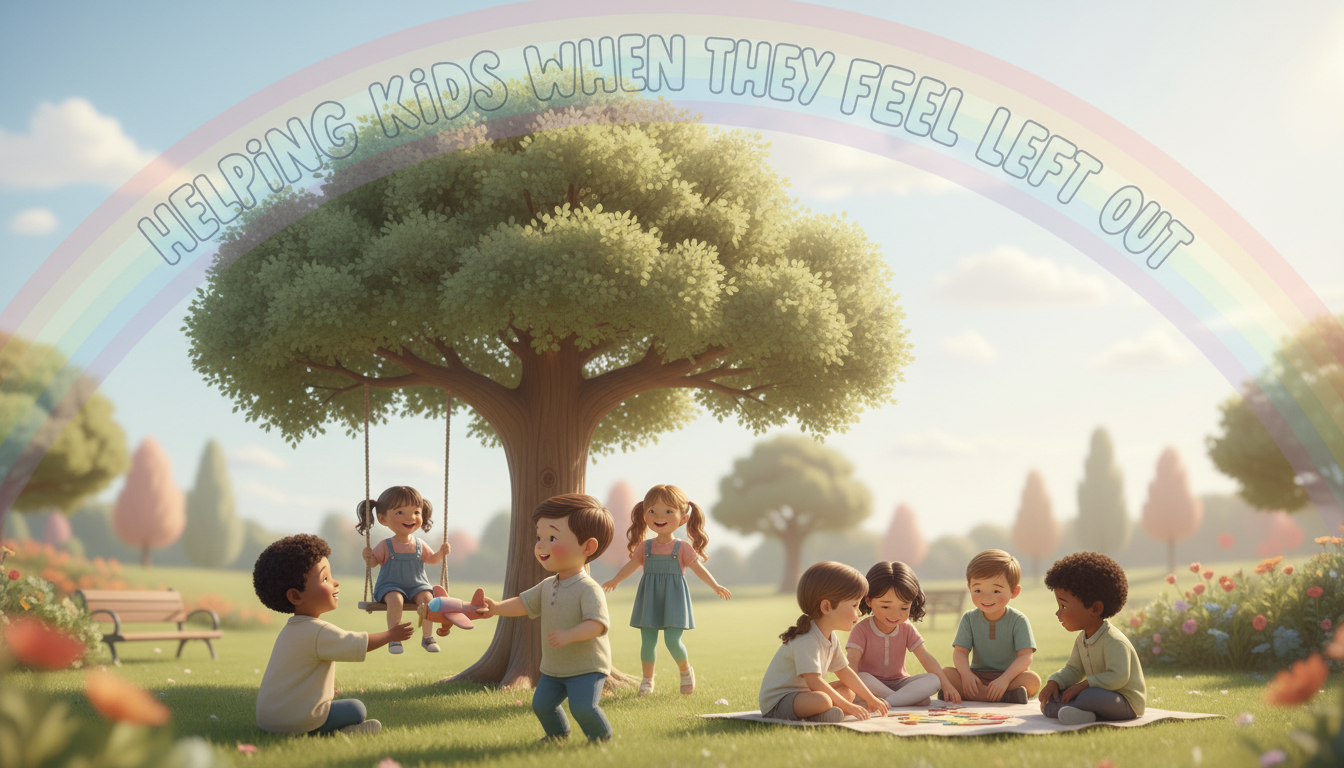
Feeling left out can hit kids hard—at school, on teams, at birthday parties, and even within friend groups that shift overnight. The goal isn’t to “fix” feelings fast, but to help a child feel safe, understood, and equipped with small, repeatable skills that make social situations easier over time. Below are simple steps to use in the moment, ways to practice at home, and guidance for when it’s time to involve a teacher or another adult.
Exclusion doesn’t look the same at every stage, and recognizing what’s typical (and what’s a red flag) helps you respond calmly and effectively.
Watch for patterns: a single rough day is different from repeated exclusion across settings (lunch, recess, clubs). If you’re noticing repeat themes, it’s a signal to move from comfort-only to comfort plus skill-building and support.
Kids can’t learn social skills when their nervous system is overloaded. Start with regulation, then move to meaning, then choose a next step.
| Moment | Try saying | Why it helps |
|---|---|---|
| Right after exclusion | “Ouch. That felt unfair.” | Communicates understanding and safety |
| Child blames self | “It makes sense you’d wonder if it’s you. Let’s look at what happened.” | Reduces shame and opens problem-solving |
| Child wants revenge | “Big feelings want big actions. Let’s calm first, then choose a helpful next step.” | Builds impulse control without judgment |
| Child wants to quit | “Taking a break can help. Then we can plan one small step for next time.” | Honors overwhelm while keeping options open |
Social coaching works best when it’s simple, flexible, and practiced in tiny bursts. Aim for “helpful tools,” not perfect lines.
If your child freezes in the moment, it’s often a regulation issue, not a “motivation” issue. Pair these tools with calming strategies so their brain can access the skill when it counts.
Confidence grows through repeated, low-pressure reps—especially when you count effort, not outcomes.
For more on supporting kids under stress with steady routines, practical coping tools, and connection, see the American Academy of Pediatrics resources for families.
If bullying is suspected, it helps to align on a shared definition and process. The federal guide at StopBullying.gov explains repeated, intentional harm and the role of a power imbalance.
For age-based expectations and positive parenting tips, the CDC child development resources can help you calibrate what’s typical versus what needs more support.
Validate the feeling first (“That sounds really lonely”), then narrow it to the specific moment (“It felt that way at recess today”). Help your child name one safe person and pick one small action for tomorrow, like greeting them, sitting nearby, or asking to join.
Teach a simple three-step entry: watch, match, add. Your child can observe for a few seconds, copy what others are doing, then offer a helpful role (hold the ball, keep score) or ask a low-pressure question like “What are the rules?”
It’s more likely bullying when exclusion is repeated, intentional, and involves a power imbalance, especially when it includes targeted teasing, social sabotage, threats, or online harassment. If you’re seeing a pattern across days or settings, involve school staff with concrete examples and documented follow-ups.









Leave a comment