Printable Indoor Activity Checklist for Kids (Ages 2–12)
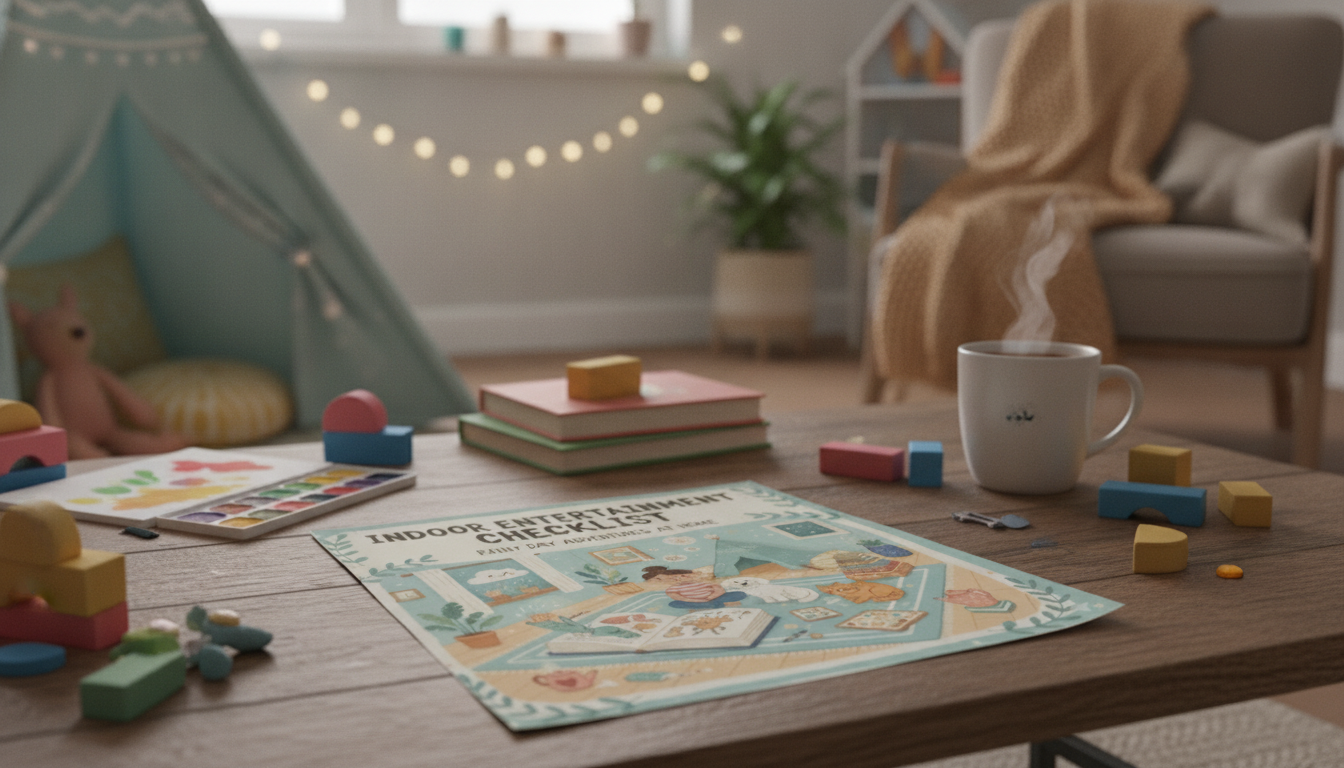
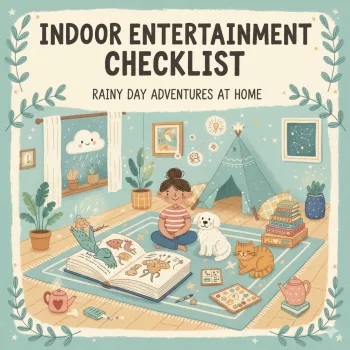
Indoor Entertainment Checklist for Kids: Easy Activities for Any Age (Printable Download)
Indoor days can feel long when kids need to move, create, and stay engaged. A simple checklist makes it easier to pick activities quickly, balance high-energy play with quiet time, and keep options ready for toddlers through tweens. This printable digital download is designed to help parents and caregivers rotate fun ideas, reduce “I’m bored” moments, and build a go-to indoor routine that works on rainy days, sick days, travel days, or anytime outside play isn’t possible.
Why a checklist works on long indoor days
When everyone is stuck inside, the hardest part often isn’t a lack of ideas—it’s choosing what to do next without spiraling into frustration. A kid-friendly checklist helps by making options visible and predictable.
- Reduces decision fatigue by offering quick, visible choices
- Encourages variety: movement, creativity, learning, and calm all in one place
- Helps kids build independence by choosing and checking off activities
- Makes transitions smoother by setting a clear next option
- Supports different ages in the same household with flexible categories
It also supports healthy pacing. Kids tend to do better when the day includes both active play and recovery time—something the CDC’s physical activity guidance for children reinforces by emphasizing regular movement and age-appropriate activity.
What’s included in the printable digital download
The goal is simple: make it easy to start, even on the kind of day when you’re tired, everyone’s cranky, and the weather won’t cooperate.
- A ready-to-print indoor entertainment checklist with a mix of active and quiet ideas
- Activities designed to scale from preschoolers to school-age kids (with simple tweaks)
- A format that works as a fridge sheet, binder page, or reusable sleeve with a dry-erase marker
- Instant access: download, print, and start the same day
- A simple layout that can be customized by circling favorites or adding household-specific ideas
Find it here: Indoor Entertainment Checklist for Kids (Printable Digital Download).
Indoor activity menu by age (quick picks)
Kids don’t all “bore” the same way. Toddlers need short bursts and sensory input, while older kids often want challenges or projects they can own. Use the ideas below as fast picks, then let the checklist do the heavy lifting day-to-day.
Fast indoor picks by age and energy level
| Age group | High-energy ideas | Calm/quiet ideas | Low-prep options |
|---|---|---|---|
| 2–4 | Dance party, obstacle course with pillows | Sticker scenes, story time, playdough | Bubble wrap stomp, color sorting |
| 5–7 | Balloon volleyball, hallway hopscotch | Origami, simple science experiments | Scavenger hunt list, “draw a monster” |
| 8–12 | Minute-to-win-it challenges, fitness dice | Puzzle race, journaling, model kits | Card games, logic riddles |
| Mixed ages | Simon Says relay, indoor bowling | Board games, audiobook + coloring | Stations: build/draw/read |
A simple 3-part plan: move, make, mellow
If indoor time often turns chaotic, structure helps—without turning the day into a strict schedule. A reliable rhythm is “Move, Make, Mellow.”
- Move (10–20 minutes): pick one active option first to meet the need for motion
- Make (20–45 minutes): follow with a creative or building activity that holds attention longer
- Mellow (10–30 minutes): end with a calming choice to prevent late-day meltdowns
- Repeat as needed with a snack and water break between rounds
- Use a visible timer so kids know when it’s time to switch or wrap up
For screen time, having a plan matters too. The American Academy of Pediatrics discussion on media and young minds highlights how thoughtful media choices and co-use can be more supportive than default, unlimited scrolling—so it helps to keep non-screen options right on the checklist.
Low-prep indoor activities that feel special
“Special” doesn’t have to mean complicated. These ideas use what you already have, but still feel like a fresh event.
- Tape road or “laser maze”: create a hallway challenge with painter’s tape and set a timer
- Indoor picnic: blanket on the floor, simple snacks, and a read-aloud
- Kitchen helper mission: measure, pour, and stir with age-appropriate tasks
- Mystery bag: pull an item and invent a story or skit around it
- Build-a-thon: pick a theme (zoo, city, spaceship) using blocks or recyclables
If snack time is part of your reset between activity rounds, pairing a predictable routine with a simple plan can reduce negotiations. The Toddler Snack Success Checklist is a helpful add-on for families who want fewer last-minute snack decisions on indoor days.
Setting up an indoor activity “grab-and-go” bin
When indoor time is tough: calming and regulation tips
For practical strategies you can use in the moment, Quiet the Storm: A Friendly Guide to Calming Sensory Overload in Kids pairs well with a checklist routine—especially when kids need help transitioning from “revved up” to regulated. For more on building self-regulation skills over time, Zero to Three’s self-regulation tips offer parent-friendly guidance.
How to print and use the checklist day after day
FAQ
What ages is the indoor entertainment checklist best for?
It works well from toddlers through older elementary kids because the activities are grouped by type (movement, creativity, calm) and can be adjusted with simple tweaks like shorter time limits, more supervision, or added challenge.
How can the checklist be reused without reprinting?
Slip it into a page protector or laminate it and use a dry-erase marker for check-offs. Keeping an extra copy in a travel bag or a second room also helps on busy days.
What if a child gets overwhelmed during indoor activities?
Switch to a calmer option, shorten the activity, and offer a quiet corner with simple comforts like pillows or headphones. Returning to a predictable routine often helps kids reset and rejoin when they’re ready.







Leave a comment