Can a 30-Day-Old Baby Fly? Safety, Rules, and Tips
Can a 30 day old baby travel in flight?
Yes, many 30-day-old babies can fly, but it depends on your baby’s health, how they were born, and your pediatrician’s guidance. Most airlines allow infants to travel within the first couple of weeks of life, yet doctors often recommend waiting until a newborn is at least a few weeks old so their immune system is a bit more developed and feeding routines are more predictable. If your baby was premature, had breathing issues, jaundice that required treatment, or any complications, get medical clearance before booking.
What to consider before booking
Start with your pediatrician, especially if the flight is long or you’ll be traveling during peak cold and flu seasons. Ask about any concerns related to cabin pressure, oxygen levels, reflux, and ear pressure. Also check your airline’s infant policy: some require proof of age for very young infants, and rules can differ for lap infants versus infants in their own seat.
Lap infant vs. car seat on the plane
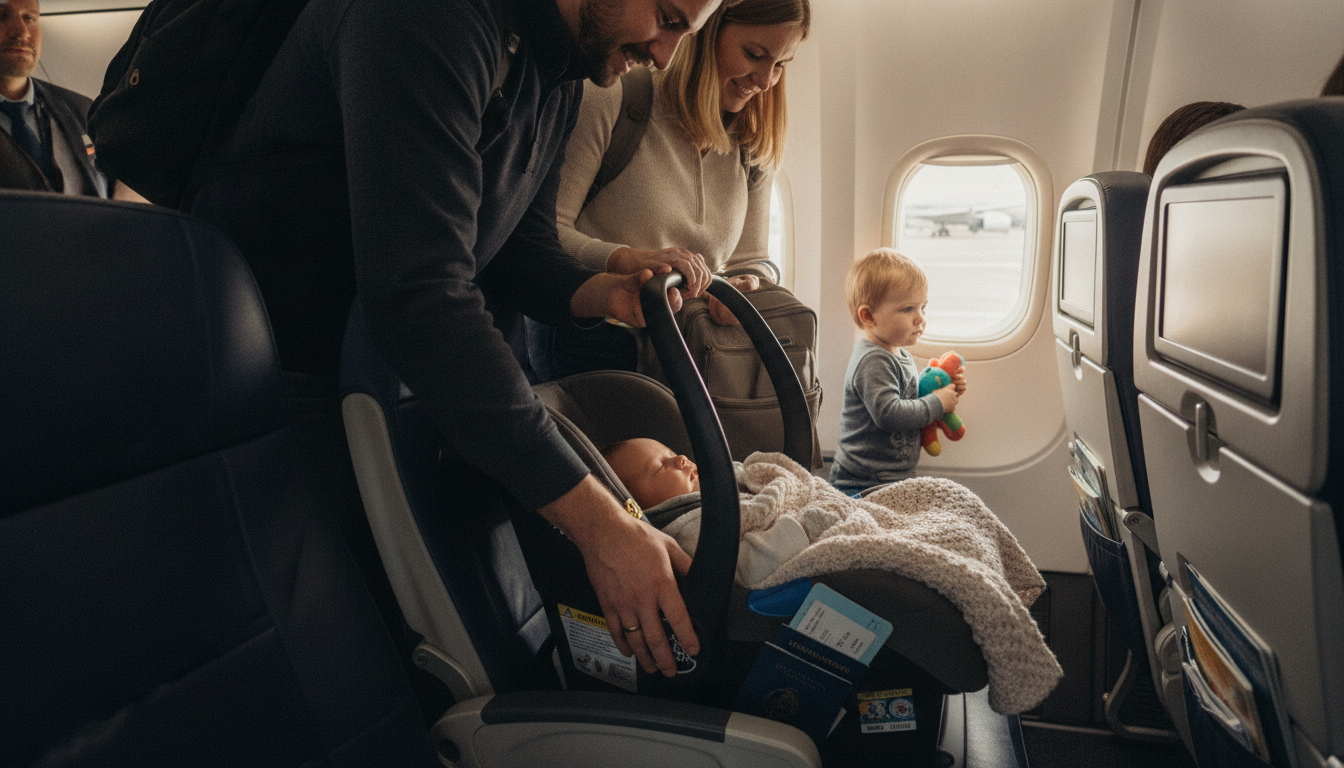
A 30-day-old baby can fly as a lap infant, but the safest setup is a separate seat with an FAA-approved infant car seat installed correctly. If you choose lap travel, plan for takeoff/landing and turbulence when you’ll need both hands available and your essentials within reach.
Tips to keep a one-month-old comfortable in the air
Feeding during takeoff and landing (breast, bottle, or pacifier) can help with ear pressure. Dress baby in breathable layers, and pack at least one full outfit change for both baby and an adult. Expect more frequent feeding and soothing than usual—build extra time into your airport routine and keep your “must-haves” accessible.
For a step-by-step packing list, in-flight plan, and practical ways to stay calm while traveling with a newborn, see the full guide: Stress-Free Flying With a Baby: Packing & In-Flight Plan.
FAQ
Do babies need a passport to fly internationally?
Yes. For international travel, babies typically need their own passport, and some destinations may require additional documents like a visa or a notarized consent letter if one parent isn’t traveling.










Leave a comment