Calm Sensory Overload in Kids: Simple Steps That Help

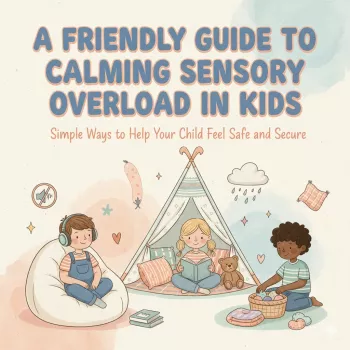
Quiet the Storm: A Friendly Guide to Calming Sensory Overload in Kids
Sensory overload can look like sudden tears, anger, freezing, or a child who “can’t hear you” anymore—often because the world feels too loud, bright, busy, or unpredictable. The goal isn’t to eliminate every trigger; it’s to help a child feel safe, understood, and able to recover faster. With a few repeatable steps (and a plan you can practice when things are calm), many families find that overwhelm becomes easier to spot early and easier to ride out.
What sensory overload can look like (and what it isn’t)
Sensory overload can show up as covering ears or eyes, bolting, hiding, shouting, crying, “melting down,” refusing touch, or seeming suddenly defiant. Often, the nervous system is already working hard—then a few more inputs land at once and the body flips into fight, flight, or freeze.
It helps to remember: a meltdown is not a tantrum for control. A tantrum is typically goal-driven (“I want that”), while overload is a loss of capacity (“I can’t handle this”). In the moment, prioritize safety and recovery first; teaching and problem-solving work best later, when your child’s body is back online. Many kids also can’t describe what feels “too much,” so behavior becomes the message.
Common triggers that build the “storm”
Overload usually isn’t one single thing—it’s stress stacking. Keep an eye out for patterns across a week, especially time of day, environment, transitions, hunger, and fatigue.
- Sound: crowded rooms, hand dryers, cafeteria noise, sudden alarms, multiple people talking at once
- Light & visuals: fluorescent lights, screens, busy patterns, fast-moving environments (stores, parties)
- Touch & body: itchy tags, tight socks, messy hands, hair brushing, unexpected hugs, certain food textures
- Smell & taste: strong fragrances, cooking odors, new foods, toothpaste flavors
- Change & uncertainty: transitions, waiting, surprises, unfamiliar places, rushed schedules, hunger or fatigue
If your child is neurodivergent (including autism), sensory differences can be more intense or more frequent. For a general overview of sensory differences as part of autism, see the NHS summary: https://www.nhs.uk/conditions/autism/.
A simple calming sequence: notice, reduce, regulate, reconnect
When overload hits, the fastest path is usually a short sequence you can repeat anywhere. Keep it simple enough that you can do it even when you’re stressed too.
1) Notice (early signals)
Watch for fidgeting, a louder voice, pacing, rigid posture, repeated questions, “stuck” behavior, or sudden arguing over small things. Early signals are your best chance to prevent the peak.
2) Reduce input fast
Lower volume, dim lights, move to a quieter spot, pause conversation, and shorten instructions. Consider noise-reducing headphones, a brimmed hat, sunglasses, or a hood—anything that quickly turns down the world.
3) Regulate the body
Body-based tools often work faster than talking. Try slow breathing with a visual cue (like tracing a finger up and down), deep pressure if your child likes it, wall push-ups, a heavy carry, or a short walk.
4) Reconnect (brief, calm language)
| Setting | Reduce input | Regulate the body | Reconnect script |
|---|---|---|---|
| Home | Quiet corner, lights low, pause TV | Bear hug (with consent), blanket, slow breaths | “You’re safe. Quiet body first. Then we’ll talk.” |
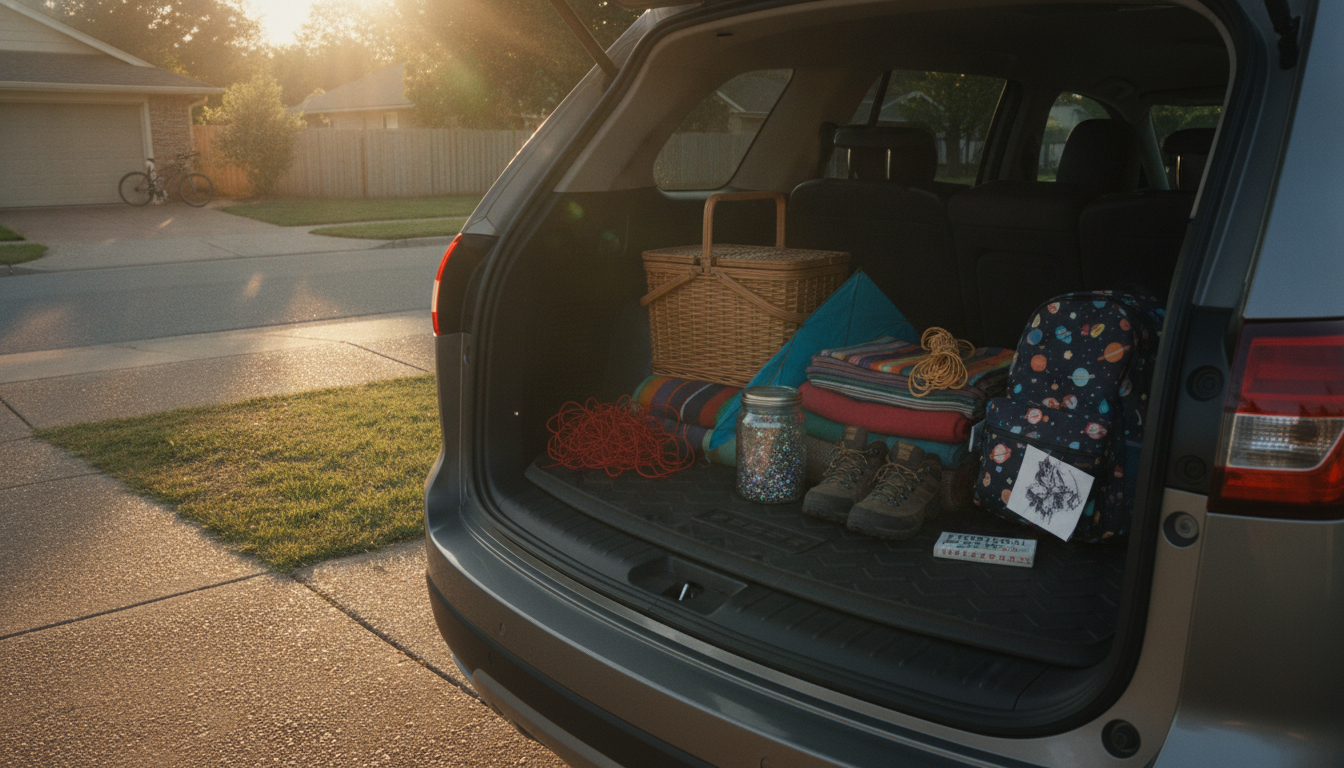
| Car | Lower music, sunglasses, minimal talking | Squeeze ball, feet presses into floor, paced breathing | “We’re almost there. Choose: quiet or story voice later.” |
| Store | Step aside/endcap, headphones, cover eyes briefly | Heavy push on cart, carry a basket, walk to calm aisle | “Too much. We’re stepping away. Hold my hand or the cart?” |
| School/daycare | Designated calm spot, reduce demands, visual cue | Chair push-ups, fidget, water break | “I see it’s loud. Take 3 minutes, then we’ll choose next.” |
Build a “calm kit” that fits your child
If food-related stress stacking is common (hunger, low blood sugar, refusing unfamiliar snacks), pairing your calm plan with a simple snack strategy can reduce blowups before they start. The Toddler Snack Success Checklist is a quick way to keep reliable options on hand for daycare days, errands, and after-school transitions.
Language that calms: short, clear, and predictable
If you’re also navigating goal-driven public tantrums (common in toddlerhood and different from sensory overload), the guide Calm in the Chaos: Mastering Toddler Tantrums in Public can help you respond with clear boundaries while still staying connected.
How the ebook supports day-to-day calm
Quiet the Storm: A Friendly Guide to Calming Sensory Overload in Kids (Ebook) is a low-pressure digital guide designed to help caregivers respond confidently to sensory overload and prevent stress stacking. It brings common triggers, early signs, calming tools, and step-by-step responses into one place—so you’re not trying to remember everything while your child is overwhelmed.
When to get extra support
Extra support can be a game-changer when overload is frequent, intense, or affecting school, sleep, eating, or family life. Start by discussing concerns with your child’s pediatrician; an occupational therapist can assess sensory processing needs and build a practical plan for home and school. For general, evidence-based parenting support strategies, the CDC’s positive parenting resources are a helpful reference: https://www.cdc.gov/parents/essentials/index.html.
FAQ
What does A Quiet Storm mean?
It’s a metaphor for big internal feelings and overwhelming sensory input that can build quietly before it spills over. The goal is gentle support that helps a child feel safe, reduce the input, and recover more quickly.
Who hosted The quiet storm in the 90s?
“The Quiet Storm” was used by many radio stations as a late-night R&B format, so the host depended on the specific station and city. If you share the station call letters or location, it’s easier to identify the 1990s host.








Leave a comment